Ontario Homeowners & Renters Guide

Summer dampness is usually caused by warm humid outdoor air entering a cool basement condensing on cold concrete and metal beams then evaporating and raising the air moisture even further.

Just like a drink on a hot day
Other factors include;
- excess humidity– showers, cooking, ,
- closed basement doors
- shared walls
- landlord-controlled HVAC settings
- concrete floors
- Basements stay consistently cool year round
- The ground temperature at 3-4 m under the surface in southern Ontario is between 10-11’C
- Lack of airflow- no central air and often one window
Common Signs of Summer Dampness
- Musty odours
- Sticky or humid air
- Condensation on windows
- Damp floors or carpets
- Rust on metal items
- Mold spots on drywall or furniture
- Efforescence
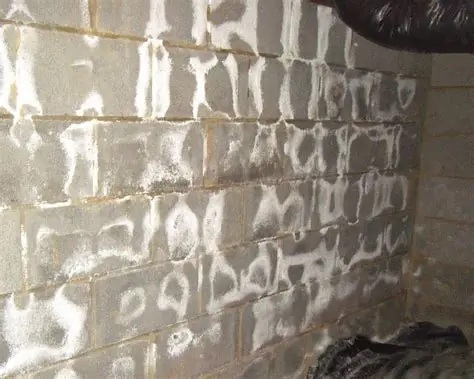
Efflorescence
It is a white calcium salt in masonry that gradually leaches out to the inner bsmt wall when the outside, underground water table rises. This can be caused by excessive rain, downspouts too close to the house and sediment that plugs the foundation drainage pipe. Its is a factor when considering basement humidity and must be dealt with from the outside. see, Yard Grading to reduce Basement Moisture
Why rental units often have conditions that increase summer dampness:
- Tenants RARELY run fans, dehumidifiers and air conditioners constantly, the cost is prohibited
- Some landlords restrict AC use if the hydro is on a common bill
- Rental units rarely have central a/c
- This traps humid air in the basement and prevents circulation.
- Townhouses often have poor cross‑ventilation, due to;
- Common walls and often just one window
How to Diagnose Summer Dampness
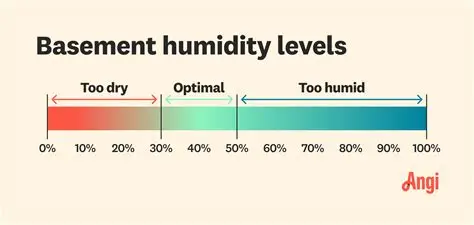
- You can check the current bsmt humidity level and temperature with a humidity meter and compare it to the chart above,
- 30-50% moisture is acceptable
- Look for Condensation areas around windows, pipes, and cold concrete walls
- If the basement is app 10°C cooler than upstairs, condensation is likely
- Check for air leaks from the dryer vent and window weatherstripping
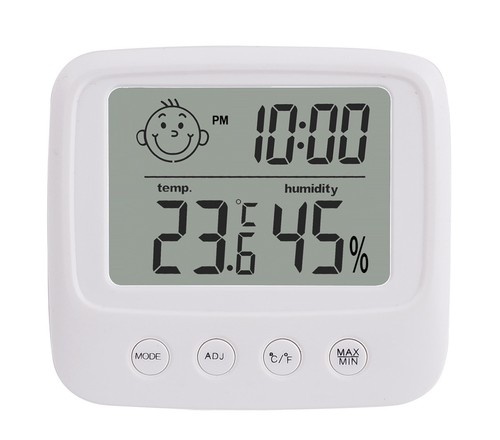
Tools you could need
- humidity meter
- Thermometer
- Flashlite
How to fix the problem
1) Increase Airflow
Airflow alleviates condensation by re-absorbing moisture at a quicker rate than static air, It can reduce mold and musty smell but does not reduce air moisture and may feel as humid as before
- Open basement door as a vent for rising humid air
- Run fans aimed at walls and floors to absorb condensation;
- Keep windows open unless outside air is excessively humid
- Turn on the furnace if its cool enough outside, to evaporate the room condensate on walls and help with the musty smell
2) Use a dehumidifier
A dehumidifier is the ONLY real way to extract moisture out of the air on a consistent basis.
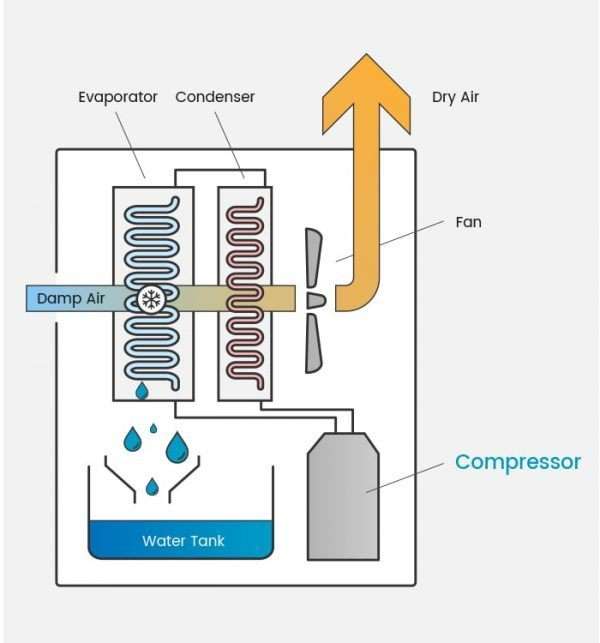
- A dehumidifier is like a scaled down, reverse air conditioner with two coils, compressor and fan
- The cold side of the coils receives the humid moist air,
- Which condenses the moisture and drips into a pan
- The air continues to the warm side of the coils to be warmed and vented to the room
Estimated hydro cost
- A medium size 30 litre dehumidifier uses 300-600 watts/ hour app
- Ontario’s hydro rate are app .75-1.00 kw/hr
- So app 20.- 30./ month plus the cost of the dehumidifier,
- Is it worth it ? ?
3) Avoid Moisture Producing Activities
Which can be difficult to do
- Long showers
- Laundry drying indoors
- Basement cooking
- Overwatering plants
4) Manage Outdoor Rain Drainage
Rain water leaking in is definitely a contributor to basement humidity and must be dealt with (see “Grading for Moisture”)
- Extend downspouts
- Improve ground grading- higher near the house
- Clear window wells.
Summer Dampness Prevention Checklist
Your downloadable PDF should include:
- Humidity readings
- Temperature comparison
- Condensation check
- Airflow checklist
- Window/door seal inspection
- Dehumidifier settings
- Exterior drainage notes
When to Call a Professional
Call a pro if:
- Humidity stays above 60%
- Mold is visible
- Water enters during storms
- Efflorescence keeps returning
- You suspect foundation seepage